“We find that as pollen levels rise, the count of suicide in a county increases – Up to 7.4% more suicides when pollen levels are at their highest levels.”
All Things Allergies is committed to raising awareness of the mental health impacts of allergic conditions, however difficult the conversation. This May, in recognition of both Food Allergy Awareness and Mental Health Awareness Month, we are addressing a serious and often overlooked topic — Suicide. It’s a heavy discussion, but one that deserves our attention.
A recent study published in the Journal of Health Economics found a striking correlation between pollen counts and suicide rates. Using data from 34 metropolitan areas in the United States between 2006 and 2018, the researchers found that suicide rates were 7.4% higher on days with the highest pollen counts.
So what is driving this relationship? It’s not the pollen itself, but rather the toll that seasonal allergy symptoms take on sleep quality, cognitive functioning, and mood — All of which are known risk factors for suicide.
Mental health history played an important role in predicting sensitivity to rising pollen levels. Individuals with known mental health conditions or treatment histories experienced a 12.2% rise in suicides on high pollen days.
Seasonal allergy symptoms, like runny noses and itchy eyes, seem to be the last straw.
This study highlights the role of health shocks — Sudden disruptions to overall wellbeing — as triggers for suicide. Even relatively small health shocks may push mental distress to a tipping point, nudging an individual from passive suicidal ideation to active suicidality. Compared to structural risk factors like socioeconomic status or access to healthcare, short-term triggers of suicide are less understood but equally as important to consider.
The authors estimated that seasonal allergies played a role in approximately 12,000 deaths between 2006 and 2018 — And as climate change increases the intensity and duration of pollen season, this impact is only expected to grow.
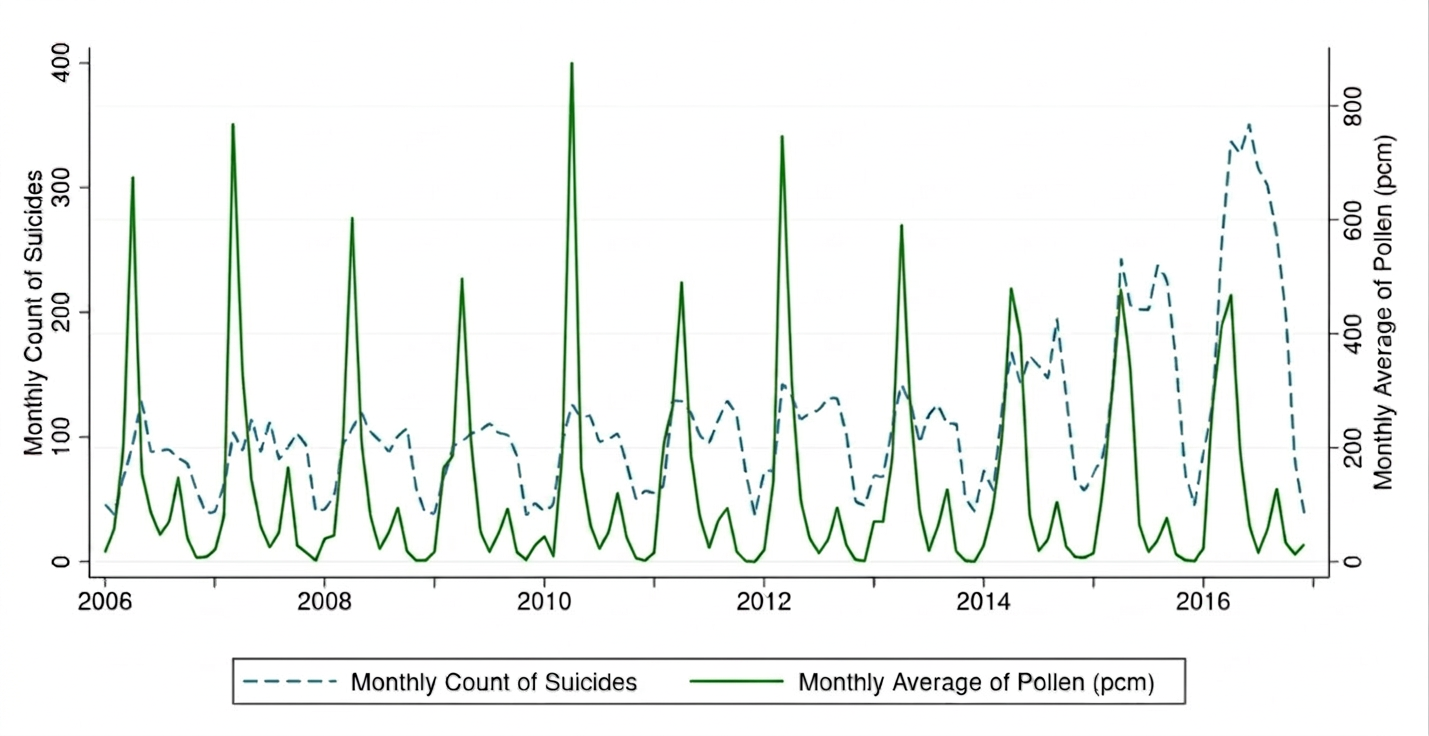
From Abramowitz, Danagoulian, and Fleming (2025)
Together, these findings underscore a guiding principle of The Hivey League — Allergic disease and mental health are deeply interconnected. This growing public health concern is yet another call to action. Increasing awareness of the mental health implications of allergy is a critical step toward better support, earlier intervention, and more comprehensive care.
For more Allergy x Mental Health content, please refer to the All Things Allergies Mental Health page for a curated list of community resources, academic articles, and personal blog posts.

If you or a loved one need to talk — Contact the Suicide & Crisis Lifeline for 24/7 free, confidential mental health support from a certified counselor.