Recapping the second annual Food Allergy Conference for Education and Sciences in partnership with Lurie’s Children’s Hospital and Northwestern University Feinberg School of Medicine.
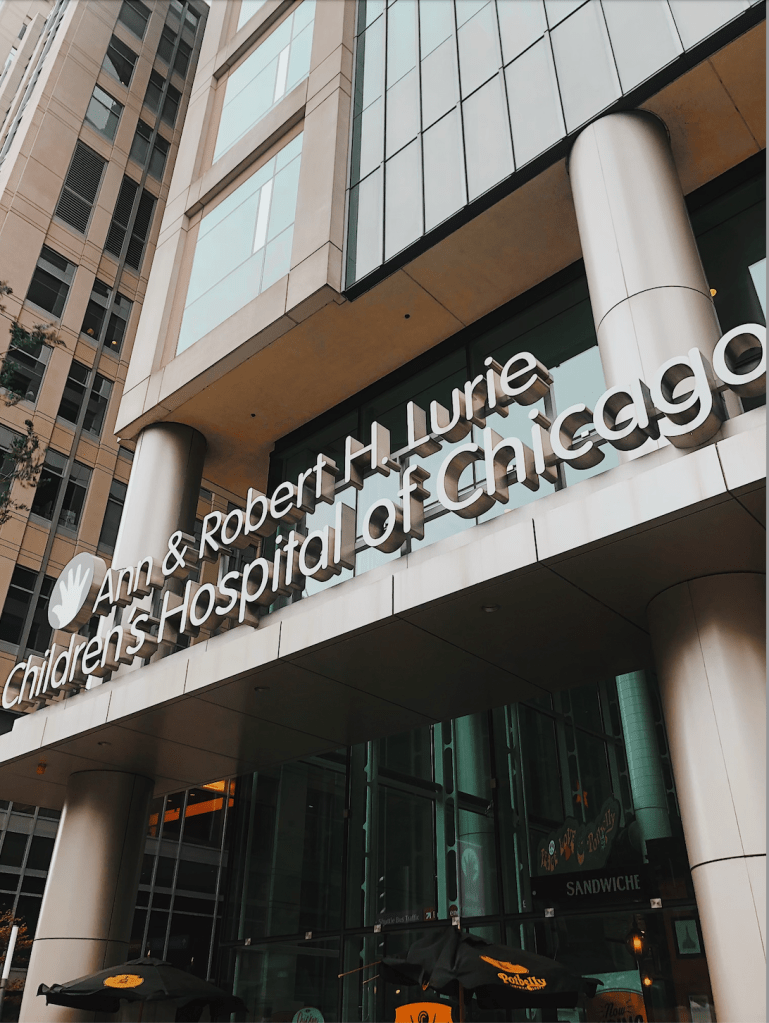
Headed by Dr. Ruchi Gupta of the Science and Outcomes for Allergy and Asthma Research Program (SOOAR), the Food Allergy Conference for Education and Science (FACES) is a celebration of food allergy innovation and inspiration. For their second annual event, experts, activists, founders, and families from across our community gathered at Lurie’s Children’s Hospital to share the latest and greatest findings in food allergy research and management.
Considering I moved to Chicago and founded of All Things Allergies just two months ago, the Food Allergy Conference for Education and Science being hosted right here in The Windy City felt like a sign that I had gotten myself exactly where I was supposed to be.
Conference Presentations
With tailored programs for adults, teenagers, and kids, the FACES conference provided an educational and empowering space for attendees of all ages. The children were treated to a reading of The Class that Can: Food Allergies with author JJ Vulopas, while teens were invited to discuss the transition to college and decision making with severe allergies.
For the adult crowd, leading professionals and advocates in the field presented on emerging research, promising new treatments, asthmas innovations, allergy advocacy, and reminders of connection and support. I have highlighted the speakers that resonated with me most below.
Auto Injector Practice
Using expired auto injectors, we were invited to practice epinephrine administration on some unsuspecting pieces of fruit. Because I had only ever used a tester, I was quick to jump on the opportunity to practice with a live Epi-Pen. I have demonstrated for my friends and family countless times, but have never had the chance to practice with a fully functioning Epi-Pen before.
Epinephrine hesitation is real – So let’s demystify the administration process! Save your expired auto-injectors and practice with your friends and family at home. It is empowering to feel prepared in the case of an emergency. The more comfortable you are around auto-injectors, the less intimidating they will be.
Traveling with Allergies
Lianne Mandelbaum – A food allergy parent and founder of the No Nut Traveler – shared her personal and professional recommendations for safely flying on commercial airlines with severe food allergies.
It is illegal for commercial airlines to discriminate against any passenger with disabilities. So when Lianne and her family were removed from an American Airlines flight, she got to work. With the help of disability lawyer Mary Vargas, legislation was written to protect the rights of the food allergy community. Under the Air Carrier Access Act (ACAA), all airlines must allow passengers with allergies to pre-board an aircraft. Because we are at the mercy of the flight attendants to receive our necessary accommodations, Lianne suggests having quick access to the legislature on your phone to provide to an airline that is refusing your right to pre-board.
Her presentation echoed the importance of filing complaints against airlines that are not properly accommodating passengers with food allergies – Noting that speaking up against injustice is what makes change happen. You can report an airline here.
Epinephrine Hesitancy
Dr. Kelly Newhall, a board certified immunologist at Chicago Family Asthma and Allergy, led a compelling discussion on epinephrine hesitancy – The phenomenon that as a community, we are resistant to administering our auto-injectors in the case of an emergency.
Time and time again Dr. Newhall reminded us – There are no negative side effects of epinephrine. Administering an Epi-Pen in the absence of a true reaction is safer than not administering an Epi-Pen during a true allergic reaction. Epinephrine cannot hurt you – It can only help you!
Dr. Todd Mahr, another board certified immunologist who presented alongside Dr. Newhall, encouraged the audience to never second guess administering their auto-injector. He found that hospitals and emergency rooms are incorrectly saving epinephrine as a last resort measure, rather than using it as first line of defense. Instead, Dr. Mahr emphasized that if you or a loved one are showing signs of an allergic reaction, do not hesitate to administer epinephrine.
Beyond epinephrine, Dr. Newhall and Dr. Mahr shared their wisdom about antihistamine medications. To my surprise, they stated that Benadryl cannot prevent/stop severe allergic reactions altogether. Rather, Benadryl may reduce some of the uncomfortable side effects of the reaction (Itching, Hives, Watery eyes). Suspect you are having a reaction? Skip searching for the Benadryl bottle and administer your Epi-Pen or Auvi-Q.
Mental Health x Food Allergies
Leading food allergy counselors in the mental health field, Dr. Jeanna Herzog, PhD, and Tamara Hubbard, LCPC, presented on the psychosocial + emotional impacts of anaphylactic reactions – A topic near and dear to my heart.
The food allergy community walks a thin line between healthy and unhealthy avoidance. While avoidance of certain circumstances may be a healthy way to stay safe from allergens, extreme restrictions or fear can develop into unhealthy avoidance measures. Sometimes these thinking patterns and anxieties can be too much to handle on your own – and that’s where Jeanna and Tamara come in.
As someone who suffers with food anxiety in the aftermath of anaphylaxis, this presentation normalized my lifelong experience for the very first time – And Dr. Herzog and Tamara Hubbard reassured me that I am not alone.
Food allergy anxiety is real – But thankfully, so is therapy. If you are like me, you were probably completely unaware that allergy informed counselors even existed – But Tamara Hubbard is looking to change that. The licensed professional counselor and food allergy parent founded the Food Allergy Counselor Directory and Website as a resource to normalize the intersectionality between mental health and food allergies. If you or a loved one is struggling with a new diagnosis, food anxiety, or life after anaphylaxis, I implore you to explore this website + reach out to for help.
Other Takeaways
Some Fun and Not-So-Fun Facts from FACES
- Dehydration and lack of sleep may be correlated with how severe an allergic reaction is.
- Anaphylaxis translates to without (Ana) protection (Phylaxis).
- Food allergy sufferers spend on average $4,000+ a year managing their allergies (Purchasing medications, ordering safe foods, etc.).
- Anaphylaxis will generally present within two hours of the ingestion of the allergen.
- Trying booking your flight for the early morning – Commercial planes are usually deep cleaned each night after the very last flight.
Wrapping Up
The FACES conference was quite possibly the safest place I have been in my life – Standing in a hospital surrounded by hundreds of people carrying auto injectors… But I must admit! I did catch myself looking over my shoulder when I heard someone breaking open a food wrapper. You can imagine just how reassuring it was to remember that I had nothing to worry about.
* Edit 2022: The Food Allergy Conference for Education and Science is returning in-person this June at Simpson-Querrey Biomedical Center in Chicago, Illinois! The event welcomes families, activists, and experts alike, so I hope you all get a chance to make the trip. Learn more here.