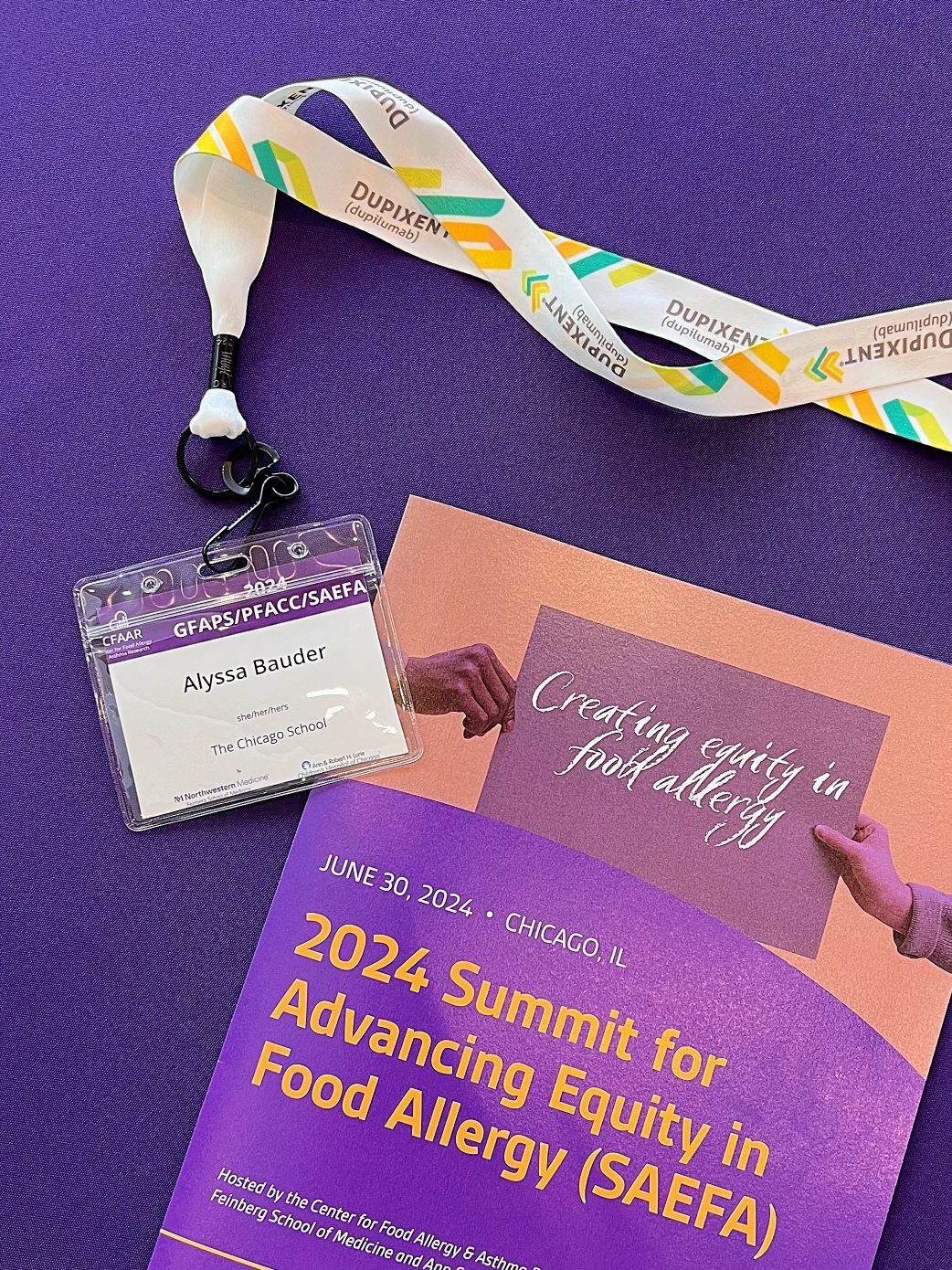
Northwestern Medicine’s Center for Food Allergy and Asthma Research (CFAAR) hosted their second annual Global Food Allergy Prevention Summit this past week in Chicago, Illinois – And I had the pleasure of attending this world class right in my own backyard.
The three day conference offered multiple tracks – including the Summit for Advancing Equity in Food Allergy (SAEFA), Pediatric Food Allergy Care Conference (PFACC), and the overarching Global Food Allergy Prevention Summit (GFAPS).
The conference welcomed primary care providers, allergy and immunology specialists, researchers, industry partners, and policy makers alike to discuss the future of allergic disease management. Patients and their families were also offered a seat at the table to contribute their perspectives alongside experts and thought leaders.
It was awe-inspiring and incredibly refreshing to witness such collaborative efforts among interdisciplinary professionals who all share a common goal – To prevent food allergy!
Indeed, the future of medicine lies in integrated healthcare.
The Center for Food Allergy and Asthma Research recognizes that the advancements in allergic disease prevention and treatment are not evenly distributed across the food allergy landscape, and while the new medication options and early introduction protocols on the horizon will do wonders for our community, we cannot allow them to create further disparity across this population.
The Summit for Advancing Equity in Food Allergy (SAEFA) agenda was dedicated to discussing health equity in food allergy prevention, diagnosis, treatment, and daily life – Hosting four panels of community members from a variety of expertise and backgrounds.
Health disparity is defined as, “A health difference that is closely linked with social, economic, or environmental disadvantage.” We know that race, ethnicity, gender, sexual identity, disability, socioeconomic status, and geographic location all contribute to an individual’s ability to achieve good health – But how does that manifest specially in food allergy?
Here were some of my key takeaways from our discussion:
- With only 4,000 practicing allergists in the United States, and less than half of those accepting Medicaid insurance, many families do not have access to specialist care.
- The majority of pediatricians + primary care providers do not feel comfortable diagnosing food allergies.
- Consequently, only 0.6% of children enrolled in Medicaid have a food allergy diagnosis – Which is a gross underestimation of the actual burden, based on epidemiological data.
- Poor health literacy is a major barrier to health equity. Providers need to avoid using medical jargon to ensure patients and families are obtaining, processing, and understanding the information offered to them.
- WIC – the special supplement nutrition program for women, infants, and children – does not adequately offer food products necessary for early introduction – A practice we know is quite effective in the prevention food allergy.
- While research like the FORWARD study is starting to explore racial differences in food allergy, there is virtually no data on allergic disease prevalence in the Native American population.
The Center for Food Allergy and Asthma Research plans to publish a journal article summarizing the collective efforts of GFAPS 2024, which will highlight these disparities and offer a road map for breaking down health equity barriers in food allergy.
As a patient, mental health professional, and social media advocate, my role at the summit was to give a voice to those who have already been diagnosed with food allergies at a conference largely dedicated to allergic disease prevention.
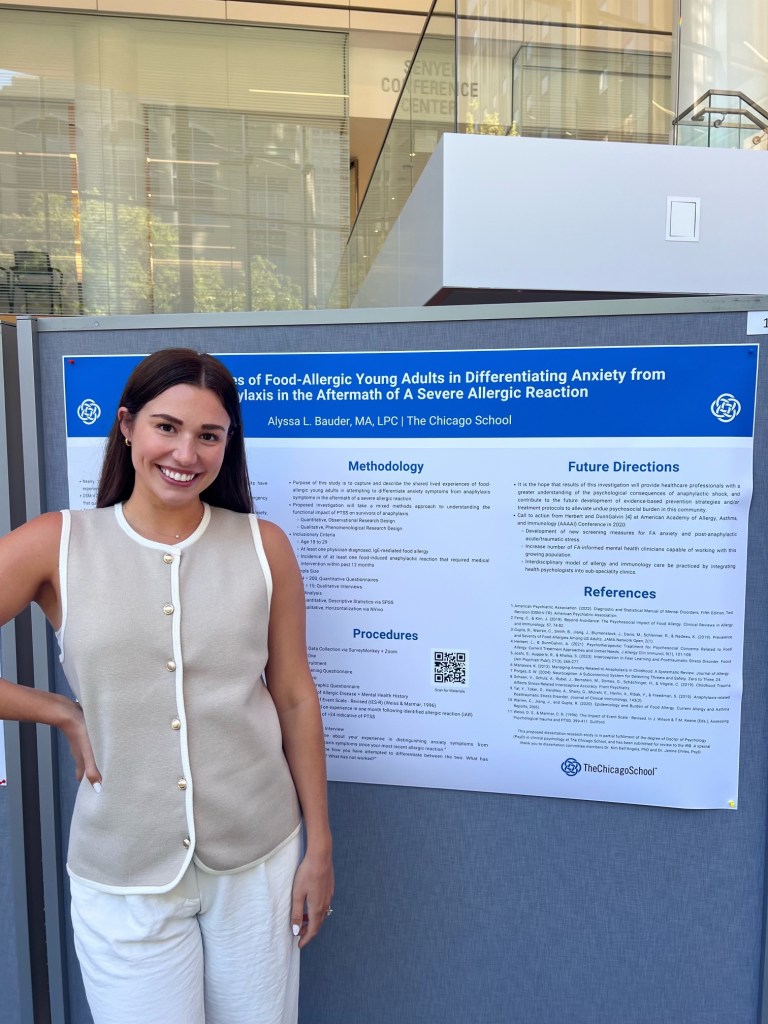
So, to speak up and speak out about #FoodAllergyMentalHealth, I presented my dissertation literature review and research proposal covering the psychosocial consequences of anaphylaxis + the overlapping symptomatology of anxiety and anaphylactic shock at the conference poster session.
What an incredible moment to see three years of hard work having its moment in the sun!
The summit came to a close along the Chicago River, as the CFAAR team hosted an evening boat tour + happy hour for the attendees. As we networked, danced, and watched the sun set over the cityscape, I felt incredibly grateful to have found myself amongst such a likeminded, passionate, and dedicated team of people.
Thank you Lurie Children’s Hospital, Northwestern University Feinberg School of Medicine, and the Center for Food Allergy and Asthma Research team for hosting this event.
Because of you, I have so much hope for the future!


 All Things Allergies